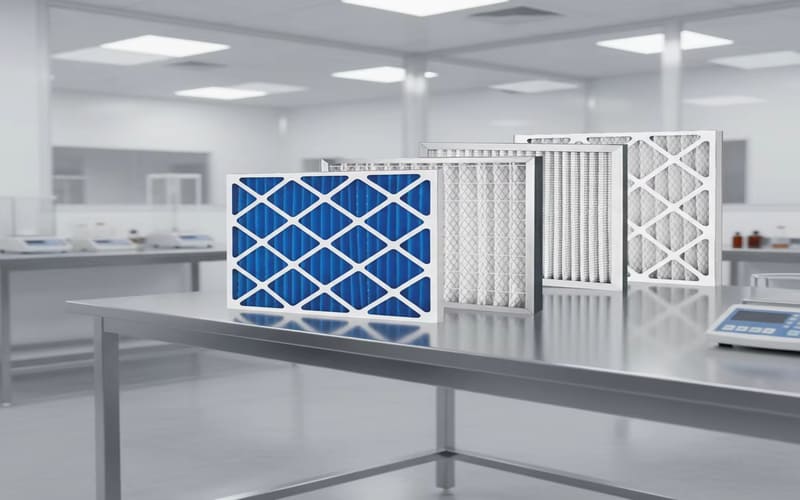
You might already know that standard air filters barely scratch the surface when it comes to keeping your indoor air pristine…
But what if you need medical-grade protection against severe allergies, asthma, or relentless wildfire smoke?
Enter the best MERV 16 furnace & HVAC air filter solutions.
As an HVAC professional, I know that choosing the ultimate filtration line defense can mean the difference between breathing pure air and accidentally suffocating your system’s airflow. MERV 16 filters offer unparalleled, hospital-grade particle capture, but they aren’t a one-size-fits-all upgrade—and installing one incorrectly can trigger serious system stress.
In this comprehensive guide, you’ll learn exactly how MERV 16 stacks up against lower ratings, whether your specific heating and cooling system can actually handle the static pressure, and the top-tier filters on the market that are worth your investment.
What Is a MERV 16 Furnace Filter?
A MERV 16 furnace filter represents the pinnacle of residential air filtration, offering near-medical-grade performance for home heating and cooling systems. MERV stands for Minimum Efficiency Reporting Value, a standardized rating system that measures a filter’s ability to capture airborne particles. As the highest standard rating available for traditional central AC and heating systems, a MERV 16 filter is designed to trap microscopic contaminants like 0.3-1 μm that lower-rated filters completely miss.
Understanding MERV Ratings
Developed by the American Society of Heating, Refrigerating, and Air-Conditioning Engineers (ASHRAE), the MERV scale ranges from 1 to 16. A higher number indicates a tighter weave and superior filtration efficiency.
- Low Ratings (MERV 1-4): Only trap large particles like carpet fibers and lint.
- Medium Ratings (MERV 5-11): Capture dust mites, pet dander, and pollen.
- High Ratings (MERV 12-16): Target the smallest particulate matter, including smoke particles, bacteria, and viruses.
As a leading HVAC filter replacement manufacturer, we engineer our high-efficiency filters to meet these rigorous standards, ensuring optimal indoor air quality for the global market.
How MERV 16 Differs from Lower Ratings (MERV 8, 11, 13)
The primary difference between a MERV 16 pleated filter and lower options lies in its efficiency at capturing sub-micron particles (0.3 to 1.0 microns).
| Filter Rating | Microparticle Efficiency (0.3–1.0 microns) | Common Trapped Pollutants |
|---|---|---|
| MERV 8 | < 20% | Large dust particles, lint, pollen |
| MERV 11 | 20% – 64% | Pet dander, dust mites, auto emissions |
| MERV 13 | 50% – 74% | Wildfire smoke, bacteria, droplets |
| MERV 16 | > 95% | Viruses, smoke particles, ultra-fine dust |
While a MERV 13 filter is often recommended by the EPA for basic virus mitigation, it still allows a significant percentage of ultra-fine particles to pass through. A MERV 16 media filter closes that gap, delivering comprehensive protection against the smallest airborne threats while managing airflow resistance.
What Are the Benefits of a MERV 16 Filter?
Upgrading to a Best MERV 16 Furnace & HVAC Air Filter completely transforms your indoor air quality. As a premium filtration option, a MERV 16 filter bridges the gap between standard residential filters and medical-grade cleanrooms. By capturing the smallest microscopic irritants, these high-efficiency filters protect both your respiratory health and your home heating and cooling equipment from dust buildup.
Superior Particle Filtration
A MERV 16 pleated filter provides unmatched efficiency in trapping airborne contaminants. It removes over 95% of particles down to 0.3 microns, which includes bacteria, carrier droplets, and microscopic dust. To see how a MERV 16 furnace air filter elevates your protection compared to standard options, check out our comprehensive guide to MERV air filter ratings.
| Particle Size / Type | MERV 8 Efficiency | MERV 11 Efficiency | MERV 13 Efficiency | MERV 16 Efficiency |
|---|---|---|---|---|
| 0.3–1.0 Microns (Virus, Smoke) | < 20% | < 20% | < 50% | > 95% |
| 1.0–3.0 Microns (Pet Dander, Dust Mites) | < 50% | > 65% | > 85% | > 95% |
| 3.0–10.0 Microns (Pollen, Large Dust) | > 70% | > 85% | > 90% | > 95% |
Wildfire Smoke and Allergen Relief
For homeowners dealing with seasonal allergies, asthma, or heavy regional pollution, a MERV 16 media filter delivers immediate allergy relief.
- Particulate Matter Lockdown: It stops ultra-fine smoke particles, pollen, pet dander, and mold spores dead in their tracks before they circulate through your central AC.
- Enhanced Odor and Gas Control: When paired with carbon clean technology, these systems also assist with VOC absorption, neutralising chemical smells and cooking odors.
- EPA Recommendations: Meeting strict guidelines for clean indoor environments, these filters significantly reduce the triggers responsible for asthma attacks and severe respiratory discomfort during wildfire seasons.
Can Your HVAC System Handle a MERV 16 Filter?
Airflow and Static Pressure Concerns
Upgrading to the best MERV 16 furnace & HVAC air filter drastically improves air quality, but it also increases airflow resistance. Because the pleats are tightly woven to catch microscopic particles, your system has to work harder to push air through. High static pressure acts like high blood pressure for your heating and cooling equipment. If your system cannot handle this resistance, airflow drops significantly, reducing comfort and straining the blower motor. Checking a MERV ratings and pressure drop chart before upgrading ensures your system can handle the resistance without failing.
Thickness Requirements: 1-Inch Slots vs. Deep Media Cabinets
You cannot slide a standard MERV 16 filter into a standard 1-inch return air slot. High-efficiency filtration requires a deep media filter cabinet to accommodate the dense pleats without choking the system.
| Filter Thickness | Compatibility | System Impact |
|---|---|---|
| 1-Inch Filter | Standard return slots | High Risk: Restricts airflow severely at MERV 16. |
| 4 to 5-Inch Media | Dedicated deep media cabinets | Safe: Maximizes surface area to maintain proper airflow. |
The Risk of System Stress and Restrictive Airflow
Using a highly restrictive furnace air filter without the right equipment setup causes severe mechanical stress. When airflow is choked, the heat exchanger in a furnace can overheat and crack, or the AC evaporator coil can freeze up. Over time, this constant strain leads to premature blower motor failure and skyrocketing energy bills. For standard systems, balancing filtration efficiency and system health is critical to finding the best furnace filters for airflow and indoor air quality without causing costly mechanical damage.
Who Actually Needs a MERV 16 Filter?
While a MERV 16 furnace & HVAC air filter offers top-tier filtration, it is not a one-size-fits-all solution for every household. Understanding your specific air quality needs will help you determine if this medical-grade filter is necessary for your home.
Ideal Residential and Medical Scenarios
A MERV 16 filter is highly beneficial for specific, high-stakes environments. You should consider upgrading to this level of filtration if your household experiences the following:
- Severe Respiratory Conditions: Ideal for individuals managing severe asthma, COPD, or highly sensitive allergies who require drastic reductions in airborne triggers.
- Immuno-compromised Residents: Provides a safer environment for those with weakened immune systems by trapping microscopic pathogens, bacteria, and virus-carrying droplets.
- Heavy Wildfire Smoke: Essential for regions prone to seasonal wildfires, as it effectively captures fine particulate matter ($PM_{2.5}$) and smoke particles.
- Extreme Pet and Environmental Allergens: Drastically reduces high concentrations of pet dander, dust mites, and microscopic pollen.
When a Lower MERV Rating Is Better for Homeowners
For the average household, a MERV 16 filter might actually be overkill and can cause unnecessary strain on your heating and cooling system. You are likely better off choosing a lower rating if:
- You Have a Standard HVAC System: Most standard residential systems lack the fan power to push air through a thick, restrictive MERV 16 media filter without experiencing a drop in airflow resistance and increased system stress.
- Budget Is a Priority: MERV 16 filters come with a premium price tag. For general dust and allergen control, learning which MERV rating filter should you use for home air quality can save you money while maintaining a healthy living space.
- Standard Maintenance Habits: If you have a typical 1-inch filter slot and want reliable protection without modifying your ductwork, opting for a well-balanced option like a MERV 11 or MERV 13 filter offers excellent home air quality without risking equipment damage.
MERV 16 vs. HEPA Filters: What Is the Difference?
When shopping for the best MERV 16 furnace & HVAC air filter, homeowners often wonder how it stacks up against a High-Efficiency Particulate Air (HEPA) filter. While both capture microscopic particles, they serve entirely different setups. Knowing the core distinctions ensures you do not accidentally choke your heating and cooling system.
Filtration Efficiency Comparison
A MERV 16 rating is the highest efficiency available for standard central heating and cooling systems, stopping over 95% of particles down to 0.3 microns. True HEPA filters take this a step further, trapping 99.97% of particles down to 0.3 microns.
Here is how the performance splits across common indoor air pollutants:
| Feature / Particle Type | MERV 16 Filter | HEPA Filter |
|---|---|---|
| Efficiency (at 0.3 microns) | 95% or greater | 99.97% |
| Pollen & Dust Mites | 99% capture rate | 99.97% capture rate |
| Bacteria & Viruses | Highly effective | Maximum protection |
| Primary Use Case | Whole-house residential HVAC | Medical facilities & standalone purifiers |
System Compatibility and Installation Differences
The biggest differentiator is airflow resistance. Standard residential furnaces and central AC systems are built to handle pleated filters, but they rarely have the fan power to push air through a dense HEPA sheet without causing severe static pressure issues.
- MERV 16 Filters: Engineered specifically for home heating and cooling systems. As a leading filter manufacturer, we optimize the pleat density to strike a balance between high-efficiency filtration and stable airflow. You can read our deep-dive breakdown on MERV vs. HEPA filters to see exactly how these ratings impact your equipment.
- HEPA Filters: Too thick and restrictive for a direct drop-in replacement in a standard 1-inch to 5-inch media slot. Running a HEPA filter directly in a regular furnace slot will restrict airflow, skyrocket your energy bills, and potentially burn out your blower motor. Using HEPA usually requires a standalone bypass system or specialized professional modification.
The Best MERV 16 Furnace Filters on the Market
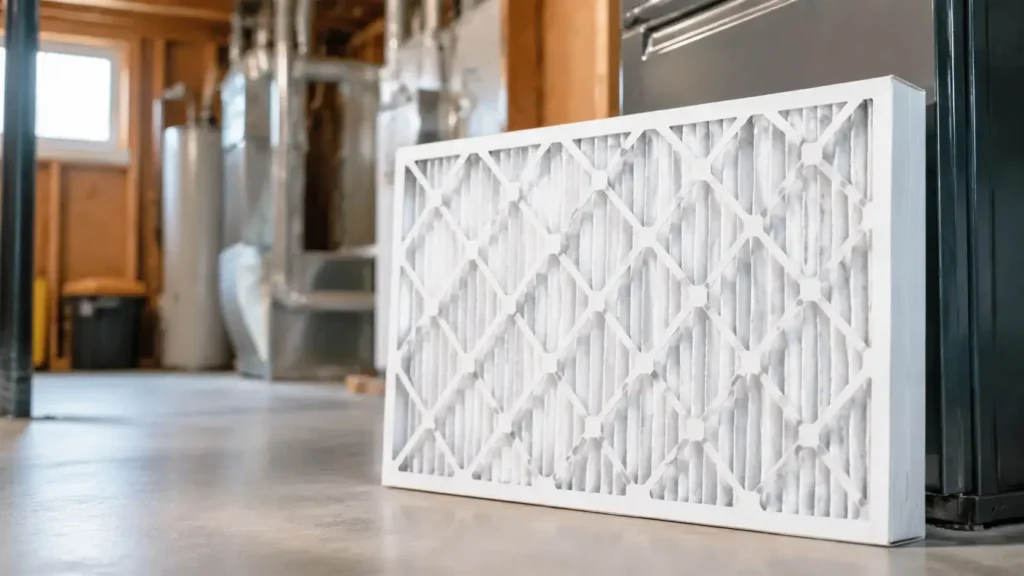
Finding the best MERV 16 furnace & HVAC air filter means balancing extreme filtration efficiency with your system’s airflow requirements. These top-tier filters trap the smallest microscopic particles, making them the ultimate upgrade for home air quality.
Lennox Healthy Climate X6675
The Lennox Healthy Climate X6675 is an industry benchmark for whole-house air purification. This pleated filter features a deep 5-inch media design that drastically lowers airflow resistance compared to thinner filters.
- Key Advantage: It efficiently captures over 95% of particles down to 0.3 microns—including bioaerosols, bacteria, and virus-carrying particles—without suffocating your HVAC system.
- Best For: Homeowners with Lennox media cabinets looking for a perfect OEM fit and hospital-grade air quality.
AprilAire 516 Media Filter
The AprilAire 516 Media Filter is engineered for maximum surface area and high-capacity dust holding. It utilizes proprietary self-sealing technology to ensure zero air bypass, meaning all dirty air is forced through the filter media rather than leaking around the edges.
- Performance: Exceptional at removing pollen, mold spores, and pet dander. It provides incredible allergy relief by trapping the microscopic triggers that standard filters miss.
- Maintenance: Lasts up to 6 months under normal operating conditions, minimizing the frequency of HVAC filter replacement.
IQAir Perfect 16 System
For the absolute pinnacle of residential air filtration, the IQAir Perfect 16 System stands alone. Unlike standard slide-in options, this is a comprehensive, medical-grade central AC filtration system integrated directly into your home heating and cooling ductwork.
- Design: Uses a double-V configuration that delivers up to 50 times more filtration surface area than a conventional furnace air filter.
- Efficiency: It is rated at a true MERV 16 level, effectively eliminating wildfire smoke particles, dust mites, and ultra-fine particulate matter with zero compromise on static pressure.
Sizing, Cost, and Maintenance for MERV 16 Filters
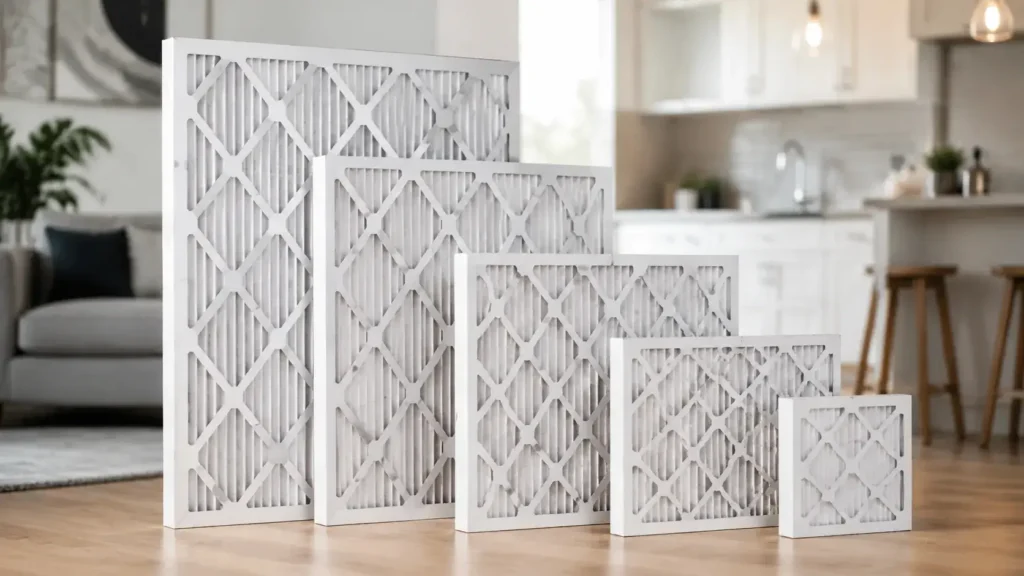
Choosing the best MERV 16 furnace & HVAC air filter requires looking at exact sizing, true long-term costs, and practical maintenance schedules. Because these filters are highly efficient, getting the specifications right keeps your system running smoothly without restricting airflow.
How to Measure and Choose the Right Fit
HVAC filters have two sets of dimensions: nominal size (the rounded numbers printed on the frame) and actual size (the precise physical measurements). For MERV 16 filters, precision is critical to prevent air from bypassing the media.
- Check the cabinet: Look at the label on your existing housing or media cabinet.
- Measure manually: If the label is missing, use a tape measure to find the exact length, width, and depth of the slot.
- Match the depth: Most MERV 16 options are deep media filters (4 to 5 inches thick). They rarely come in standard 1-inch sizes because high-efficiency filtration requires more surface area to allow proper airflow. Understanding these requirements is a fundamental part of navigating different types of air filters for residential systems.
Average Costs and Financial Considerations
High-efficiency filtration comes with a higher initial price tag, but the extended lifespan of thicker media filters offsets the cost over time.
| Filter Type | Average Price Range (USD) | Lifespan | Annual Estimated Cost |
|---|---|---|---|
| Standard 1-Inch Filter | $10 – $25 | 1 – 3 Months | $40 – $100 |
| Premium MERV 16 Media Filter | $90 – $180 | 6 – 12 Months | $90 – $180 |
While the upfront furnace filter cost for a MERV 16 model is higher, you buy fewer replacements per year and better protect your heating and cooling equipment from dust buildup.
Real-World Replacement Schedule
While many manufacturers advertise a 12-month lifespan, your actual replacement schedule depends on your indoor environment. We recommend inspecting the filter every 6 months.
Replace your MERV 16 filter sooner if you notice: Heavy pet dander or shedding from multiple domestic animals. Visible gray ash or dark discoloration from wildfire smoke or cooking. Reduced airflow coming from your supply vents. Increased dust settling on household surfaces.
Frequently Asked Questions About Best MERV 16 Furnace & HVAC Air Filters
Is MERV 16 too restrictive for a standard furnace?
Yes, a MERV 16 filter can be too restrictive for a standard furnace if your system is designed only for basic 1-inch filters. Because these high-efficiency filters trap micro-particles, they create higher airflow resistance and static pressure. Running a MERV 16 filter in an incompatible system can choke your home heating and cooling equipment, causing short-cycling or blower motor failure. If you want to step up from a lower rating, check out our comparison on MERV 11 vs. MERV 12 air filters to see how lower ratings impact system airflow before jumping straight to medical-grade filtration.
Does a MERV 16 filter help with severe allergies and asthma?
Absolutely. A MERV 16 furnace air filter provides top-tier allergy relief by capturing over 95% of airborne particles down to 0.3 microns. It is highly effective at removing the most troublesome triggers from your indoor air, including: Pollen and mold spores, Dust mites and pet dander, Smoke particles from wildfires or cooking, Bacteria and virus-carrying droplets. However, you need to pay attention to the airflow restriction.
How often do you need to change a MERV 16 filter?
For a standard HVAC filter replacement schedule, a deep-media MERV 16 filter typically lasts 6 to 12 months. Because these are thick pleated filters (usually 4 to 5 inches deep), they have a massive surface area to hold dust without clogging instantly. However, if you have multiple pets, live in an area prone to wildfires, or run your central AC and heating constantly, you should inspect the media filter every 4 to 6 months to ensure optimal system performance.